The importance of cleaning your wheelchair cushion

Are wheelchair cushions a paradise for microorganisms? Which factors and cushion properties influence this?

Vicair cushionsThere are 5 key characteristics of effective wheelchair cushion design 1, but expert opinions and 90% of wheelchair users found that at least 3 other key characteristics are missing, namely microclimate, ease of use and washability. Washability is particularly important as proper cleaning of a cushion should lead to a reduction in bacterial load. With the introduction of COVID-19 and the emergence of multidrug-resistant bacteria, ensuring proper cleaning and disinfection of reusable medical devices has become increasingly important. Adequate cleaning can also extend the lifespan of a cushion, improve skin health, and control odour. Therefore a literature review is conducted to explore the significance of cleaning and disinfecting wheelchair cushions and to identify factors and cushion properties that influence this process.

Multiple studies have found that wheelchair use increases the likelihood of microbial colonisation of the user 2-4 therefore appropriate cleaning is important. To classify medical equipment Spaulding created criteria in 1970. Medical equipment used on patients is classified into three levels based on infection transmission risk, each requiring specific disinfection methods 5 & 6:

Non-critical items: these items only come into contact with intact skin, such as stethoscopes, blood pressure cuffs, wheelchairs, and patient beds. Although non-critical items have the lowest classification within the Spaulding Classification, these items play a crucial role in patient care, and research has demonstrated their involvement in pathogen transmission 7.

Semi-critical items: are any items that touch mucous membranes or broken skin, such as endotracheal tubes and laryngoscopes.

Critical items: are items that are going to enter vasculature or sterile tissue, including catheters and surgical instruments.


Corresponding with the Spaulding criteria there are 3 different levels of disinfection:

High-level disinfection: This level kills all microorganisms except large numbers of bacterial spores.

Intermediate-level disinfection: This level kills mycobacteria, vegetative bacteria, most viruses, and most fungi, but may not necessarily kill bacterial spores.

Low-level disinfection (LLD): This level kills most vegetative bacteria, some fungi, and certain viruses.


Before disinfection, it is crucial to clean medical equipment because pathogens are more likely to survive on soiled surfaces where the soil acts as a protective barrier 8 & 9. According to the Spaulding criteria, wheelchair cushions are categorised as non-critical devices requiring LLD 6.

Non-critical medical devices need cleaning, followed by LLD. Examples of LLD’s include phenolics and iodophors, such as wescodyne, bactergent, hy-sine, ioprep, providone, Hil-Phene, LpH se, Metar, Vesphene, Decon-cycle.

Mohapatra defines disinfection as the process of killing harmful vegetative bacteria and viruses on surfaces and objects, excluding bacterial spores.

They recommend achieving at least a 99.9% reduction in microorganisms (log 3 reduction). However, achieving this can be challenging in some care facilities due to a lack of knowledge about medical device cleaning, tracking systems, and guidelines, which impacts the cleaning 10.

Cleaning the cushion can also be difficult due to the material compositions of the cushion 11-16 (see table 1 on the last page). Foam cushions can not be submerged in water, and therefore can only be wiped with warm water and soap.

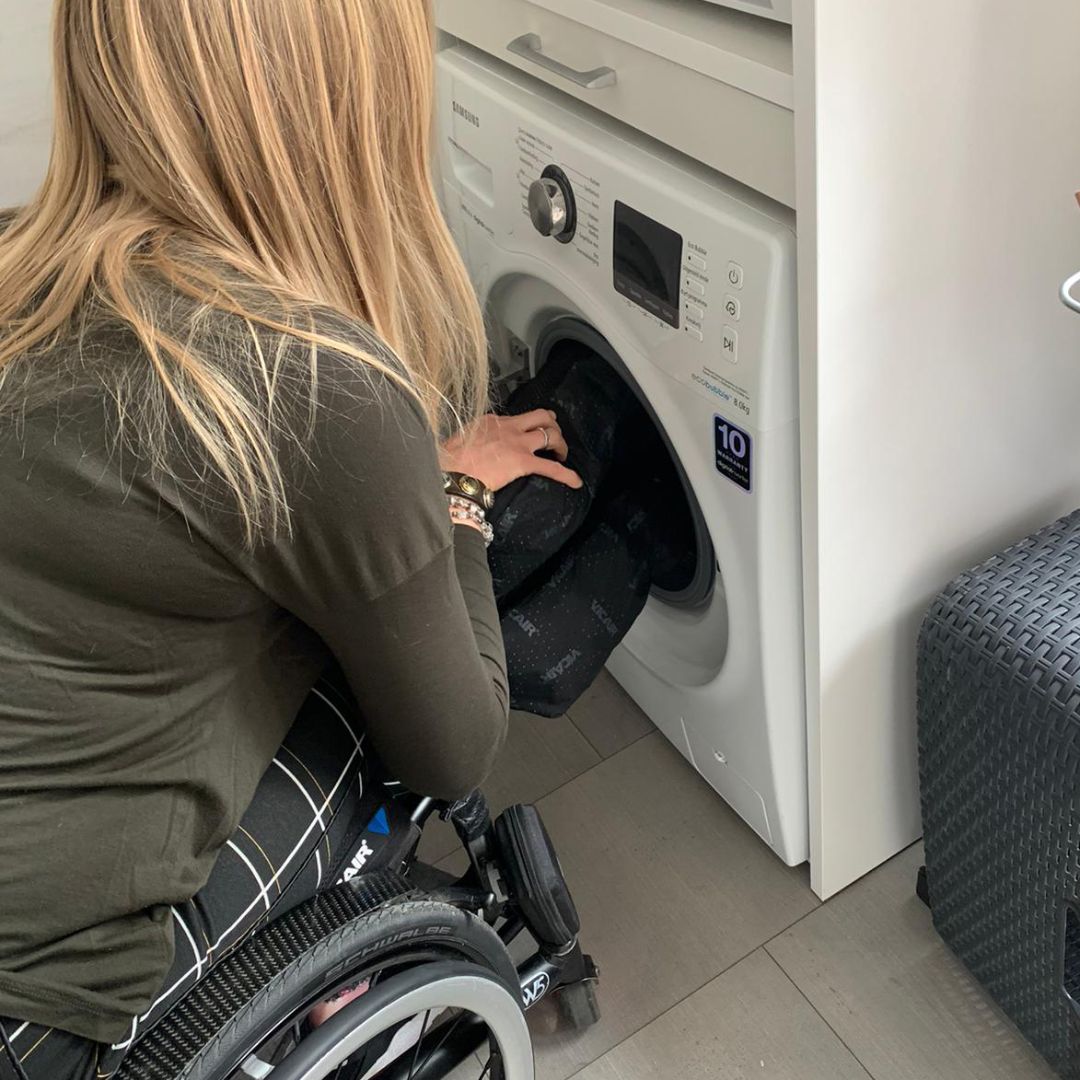
Vicair O2 wheelchair cushions are the only wheelchair cushions that are easy machine washable at 60C and can be subsequently sprayed with a disinfectant, without causing any negative consequences.


for the cushion performance. Agidens demonstrated that washing Vicair cushions at 60°C reduces the bacterial load by 99.99% 17. This reduction in bacterial load achieved through washing is equivalent to the reduction required for disinfection according to Mohapatra 18, this is achieved without the use of a LLD. (More about the research of Agidens can be found in the one-pager “How effective is washing your Vicair wheelchair cushion?”)

Thus, considering a Vicair O2 cushion is recommended when confronted with (bacterial) soiling, repeated use, or other factors that impact the hygiene and cleanliness of the wheelchair cushion.


References

  1. Levy, A., Shoham, N., Kopplin, K., & Gefen, A. (2018). The Critical Characteristics of a Good Wheelchair Cushion. In Science and Practice of Pressure Ulcer Management (pp. 17–31). Springer London.

https://doi.org/10.1007/978-1-4471-7413-4_2

  1. Martak, D., Gbaguidi-Haore, H., Meunier, A., Valot, B.,

Conzelmann, N., Eib, M., Autenrieth, I. B., Slekovec, C., Tacconelli, E., Bertrand, X., Peter, S., Hocquet, D., & Guther, J. (2022). High prevalence of Pseudomonas aeruginosa carriage in residents of French and German long-term care facilities. Clinical Microbiology and

Infection, 28(10), 1353–1358.

https://doi.org/10.1016/j.cmi.2022.05.004

  1. Tu, M. G., Lin, C. C., Chiang, Y. T., Zhou, Z. L., Hsieh, L. Y., Chen, K. T., Chen, Y. Z., Cheng, W. C., & Lo, H. J. (2022). Distribution of Yeast Species and Risk Factors of Oral Colonization after Oral-Care Education among the Residents of Nursing Homes. Journal of Fungi, 8(3). https://doi.org/10.3390/jof8030310
  2. Weppner, J., Gabet, J., Linsenmeyer, M., Yassin, M., & Galang, G. (2021). Clostridium difficile Infection Reservoirs Within an Acute Rehabilitation Environment. American Journal of Physical Medicine & Rehabilitation, 100(1), 44–47. https://doi.org/10.1097/PHM.0000000000001579
  3. Rowan, N. J., Kremer, T., & McDonnell, G. (2023). A review of

Spaulding’s classification system for effective cleaning, disinfection and sterilization of reusable medical devices: Viewed through a modern-day lens that will inform and

enable future sustainability. Science of The Total Environment, 878, 1–18.

https://doi.org/10.1016/j.scitotenv.2023.162976

  1. Spaulding, E. (1970). The role of chemical disinfection in the prevention of nosocomial infections. International Conference on Nosocomial Infections.
  2. Klacik, S. (2019). ‘Noncritical’ OR items deserve due diligence in disinfection – OR Manager. International Association of Healthcare Central Service Materiel Management. https:// www.ormanager.com/noncritical-items-deserve-due-diligence-disinfection/
  3. Ontario Agency for Health Protection and Promotion (Public Health Ontario), & Provincial Infectious Diseases Advisory Committee. (2013). Best practices for cleaning, disinfection and sterilization of medical equipment/devices in all health care settings (3rd ed.). Queen’s Printer for Ontario.
  4. Werkgroep Infectie Preventie, de Bruyn, A. C. P., van Klingeren, B., & Severin, W. P. J. (2009). WIP richtlijn – Beleid reiniging desinfectie en sterilisatie. www.wip.nl
  5. Gardner, P., Muller, M. P., Prior, B., So, K., Tooze, J., Eum, L., &

Kachur, O. (2014). Wheelchair cleaning and disinfection in Canadian health care facilities: ‘That’s wheelie gross!’ American Journal of Infection Control, 42(11), 1173–1177. https://doi.org/10.1016/j.ajic.2014.08.007

  1. Cushioning Products by Supracor – User manual – Stimulite. (2018). www.supracor.com
  2. Jay Foam Cushion Products User Instruction Manual & Warranty. (2021).
  3. JAY J3 Cushion Owner’s Manual. (2017).
  4. Jay Xtreme Active Owner’s Manual. (2018).
  5. ROHO ® DRY FLOATATION ® Wheelchair Cushions Operation Manual. (2019).
  6. Vicair Vector O2 User Manual. (2018).
  7. Op De Beeck, J. (2023). Test Report Disinfection Wheelchair Cushion.
  8. Mohapatra, S. (2017). Sterilization and Disinfection. In Essentials of Neuroanesthesia (pp. 929–944). Elsevier.

https://doi.org/10.1016/B978-0-12-805299-0.00059-2


How effective is washing your Vicair wheelchair cushion?


vicair washable cushions

Washing Vicair products at 60°C with a mild detergent reduces the bacterial load by 99.99%, as demonstrated in recent tests conducted by Agidens, and an independent test centre in Belgium specializing in process and cleaning validation (Agidens test report disinfection wheelchair cushions – 2023, written by (Op De Beeck, 2023))1.

Three Vicair cushions, namely the Vicair Adjuster O2, Vector O2, and Vicair 4, were tested by Agidens for bacterial load reduction after washing. To demonstrate disinfection capabilities using a washing program on a common household washing machine together with laundry detergent (Areal Colour).

The Vicair 4 cushion was included due to its “hidden” zippers, which may be more prone to contamination. As opposed to the two other cushions, the top and bottom sides of the Vicair 4 are both made of the same polyester fabric with a polyurethane coating, and there are no Velcro strips on the bottom side.

Eleven different test locations on the cushion, including difficult-to-reach areas, were identified as worst-case scenarios. After washing the cushions for one hour at 60°C, there was on average a remarkable 99.99% reduction in bacterial load across all test locations.

While the zipper and Velcro of the Adjuster O2 and Vector O2 cushions posed slightly more challenge for disinfection, they still achieved at least a 99.99% reduction in bacterial load. Except for the zipper of the Adjuster during run 3, with a bacterial load reduction of 99.988%, this was the location with the lowest reduction. At 2/3th of the locations (Liner [top, bottom, grooves, outside, and inside], SmartCells, and compartment walls), the bacterial count after washing was less than <10 CFU/ml (colony-forming units per ml), indicating no countable residual bacterial load.

Notably, the test showed no significant difference in disinfection efficacy between professional detergent and common household detergent.

The effectiveness of cleaning products is expressed in a log reduction. This means that the difference in the amount of bacteria load before and after cleaning or disinfection is considered. Log 1 indicates that 90% of the bacteria have been killed, log 2 represents 99%, log 3 is 99.9%, log 4 is 99.99%, and so on.

The log reduction achieved during all three runs was similar across all test locations. On average, the disinfection phase lasted 10 minutes, with temperatures ranging between 57°C and 61°C. A log reduction of 4 (equivalent to a 99.99% reduction in microbes) is generally considered sufficient for Class 1 medical devices. Except for the zipper of the Adjuster O2 cushion during run 3, the desired reduction was achieved at every test location of all cushions during the three runs.

The literature review “the importance of cleaning your wheelchair cushion” showed that a log 3 or 4 reduction is generally considered as being sufficient for Class 1 (low risk) medical devices.2 This indicates that a common household washing machine, in combination with laundry detergent, effectively cleans even the most challenging-to-disinfect areas of the cushions, making it suitable for this type of medical device. The open design of the cushion facilitates the easy penetration of water and detergent into the compartments and SmartCells 1, which is why the cushions can be cleaned effectively.

References

  1. Conijn, N., Helming, T., Van Der Heyden, B., & Kramer, C. (2023). The importance of cleaning your wheelchair cushion 04.3REV8.23. 2. Op De Beeck, J. (2023). Test Report Disinfection Wheelchair Cushion.

The effects of misuse of your wheelchair cushion


It is estimated that 10% of the population are people with disabilities. About 10% of the people with a disability require a wheelchair.

A wheelchair is appropriate when it meets the individual’s needs and environmental conditions; provides a proper fit and postural support based on sound biomechanical

principles.


One element of postural support is the wheelchair cushion. Wheelchair seat cushions are designed to provide comfort and aid against pressure injury development. To aid against pressure injuries, cushions are designed to reduce extrinsic risk factors known to increase the risk of pressure injuries, such as pressure and shear.


Manufacturers of wheelchair cushions should specify the an exact description of the intended purpose in the device’s instructions for use and should specify contraindications, warnings, and precautions.


Four commonly used wheelchair cushions are foam, foam/gel, interconnected air cell, and compartmented air cell cushions. Their instructions for use differ based on intended use/indications, expected lifetime, and precautions.

However, despite the clear instructions in the instructions for use of wheelchair cushions, there is still a risk that a wheelchair cushion can be misused with all the detrimental consequences that can result from misuse, primarily pressure injuries (PI’s), skeletal deformation, and loss of function.


 Risks of misuse of a wheelchair cushion

Healthcare professionals, clinical educators, carers, but also patients must be aware of how to apply a medical device in accordance with the instructions for use and the potential risk of developing a Device Related Pressure

Injury (DRPI) if medical devices are not applied correctly. This is particularly important in the community setting. Devices should be carefully selected to ensure a good fit with the user’s anatomy and contours. It should also

be possible to be able to adjust them in response to changes in tissue characteristics, volume, and contours.


Misuse of a wheelchair cushion could also lead to accelerated aging or failure of the cushion.


 Factors influencing misuse of a wheelchair cushion – disregarding the instructions for use

Wheelchair cushion manufacturers disclose in their instructions for use the maintenance of the cushion and when there is potential cushion failure. When an individual does not adhere to the instructions in the instructions

for use, this is considered to be misuse. Furthermore, these instructions for use instruct when and how to check for bottoming out, if an individual continues to use the cushion when bottoming out has occurred, this is also

considered as misuse and discouraged by wheelchair cushion manufacturers.


 Continuing use while cushion shows fatigue

After 6 month of use, 70% of foam wheelchair cushions show signs of fatigue. When a foam cushion ages, interface pressure magnitudes tend to rise over time.

If a cushion is used after the cushion has started to show material fatigue, the user is at a higher risk of developing pressure injuries since the cushion age has an inverse

relationship with cushion performance.

One study found a PI incidence of 26.4% in wheelchair users with chronic Spinal Cord Injury (SCI) and reasoned that this might be due to prolonged use of a foam cushion.

Foam cushions are not durable and deteriorate over time, even without use, and therefore should be changed more frequently (e.g. every six months instead of yearly).

The study by Kovindha et al. is not the only study that found prolonged use of a foam cushion. A study by Sumiya et al. found that foam cushions can be used upwards of 4 years before being replaced. This means

that cushions that are profoundly deteriorated, are still being used, which could lead to unacceptably high interface pressures.


 Over- or underinflation of air-filled cushions

Air-filled cushions, specifically rubber designed cushions with multiple air bladders, are at risk of over- or underinflation. When a wheelchair cushion is over-inflated, there is less immersion and envelopment, which

can lead to stability issues, higher interface pressures, and an increased risk of pressure injuries. When a wheelchair cushion is underinflated, this can lead to bottoming out, which also puts the user at a higher risk

of developing pressure injuries because tissue is not suspended in the material and hits the bottom of the wheelchair. Furthermore, the bladders of these cushions can be punctured or burned, rendering them useless.11 12


Discussion

Unfortunately, there was very little literature on misuse. Therefore, we had to rely heavily on other search engines such as google scholar, but also on experts in

the fields. Despite all our efforts, we could include only seven studies in this review.

When we asked experts in the field for possible relevant literature, we were able to include fourteen articles to assess for eligibility based on the text.


Assess the incidence of misuse of a wheelchair cushion 

Only one of the seven studies (Key et al.6) reported the incidence of misuse during a visit at the seating clinic. Of the 166 patients included and followed-up by Key et al., 4

patients were reported to misuse their cushion.

However, these incidents of misuse were only caught during a visit at the seating clinic. Therefore, incidents of misuse outside of the seating clinic were not caught, which could mean that the true incidence of misuse is

higher than Key et al. reported.

Anecdotal evidence corroborates this suggestion.


Several experts in the field reported about wheelchair users they met whose cushions were placed in the wrong orientation or even upside down and came to them complaining about discomfort. Therefore, the true

incidence of misuse remains unknown.


 Assess the risk of misuse of a wheelchair cushion

We found one extensive review on device related pressure injuries (DRPI) which, although it was not specifically on wheelchair cushions, provided extensive evidence on increased risk of development of pressure injuries

when a device provides pressure and/or shear at the skin-device surface.7 We feel comfortable extrapolating these results to misused wheelchair cushions, since an offloading cushion that is sat upon whilst in the wrong

orientation, can possibly increase shear and compressive forces, leading to an increased risk of pressure injuries.

However, it can also lead to minor complications such as discomfort and backpain or neck pain resulting from poor posture.


Assess factors influencing misuse of a wheelchair cushion

This was the only aim that was somewhat satisfactorily met since we found the most literature on factors influencing misuse. Although the factors identified by these studies are very important and should be taken seriously, due to the low amount of data, this is probably not the complete picture. Experts in the field might be able to add factors to the list that are not identified in this review, but are encountered in their work.

All factors influencing misuse boil down to the same thing, not following the instructions for use as specified by the manufacturer


Therefore, this implies that a lot of incidents of misuse can be prevented by a sufficient understanding and following the instructions for use, especially the ‘use’ and ‘caution’sections of instructions for use, and in the case of foam cushions also the ‘expected lifetime’ section. However, there could be several reasons why an individual does not adhere to the instructions for use. Firstly, the instructions for use could have not been provided with the cushion. Secondly, the wheelchair user is unable to understand the instructions for use due to language barriers, intellectual disabilities, or learning disabilities. These reasons are very serious, and action should be undertaken to decrease the risk of misuse. Possible solutions could be graphic presentation of the steps one needs to undertake to correctly use the cushion, short video’s explaining how to use the cushion, or 1-on-1 instruction of the wheelchair user and/or caregiver.


Future directions

There is very little literature regarding misuse of a wheelchair cushion. Since proper use is needed to achieve pressure and shear reducing properties, more scrutiny is needed regarding misuse.


Conclusion

Misuse or improper use of a wheelchair cushion can be a cause of the development of pressure injuries. Especially when the wheelchair user has both physical and intellectual disabilities. All Vicair cushions are provided with a Quick Installation Guide which depicts the installation steps, skin checks with pictures and a QR code linking to the user manual.

The Vicair 4 wheelchair cushion consists of four compartments of equal size. This cushion can be placed in the wheelchair in any orientation, even upside down, without affecting the pressure redistributing, positioning,

and microclimate control properties. Therefore, a Vicair 4 should be considered when there is a risk that the user will misuse their wheelchair cushion.


Larissa de Groot | 04-2021 | 02.12REV4.21


Independence chair for independence life for people with mobility restrictions

Reason For Using the VELA Independence Chair

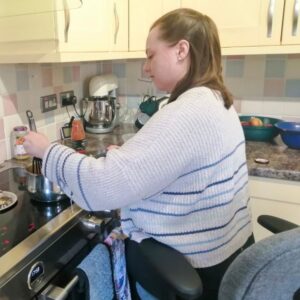
I was interested in the VELA Chair particularly for use in the kitchen, as tasks such as cooking and unstacking the dishwasher are things I really struggle with due to the amount of pottering involved, to the point I am not typically able to manage them. The VELA Chair appealed to me because it is designed to offer support while being foot-propelled and has an electric lift feature, meaning it seemed like a good solution for me in the kitchen on paper as it could help me reach the top cupboards seated, so I wanted to explore further.


Vela Independence chair 700E

Using the VELA Chair

I started by using the chair at my desk like a standard office chair. It is highly adjustable and can be set up exactly how you want. The levers were easily reachable and easy to control such that it was easy to finetune my position, something I find difficult to do when using my normal chair. This also meant that I could easily adjust my position throughout the day, changing the seat bucket every so often to keep myself comfortable, which in turn helped my back pain and allowed me to sit for longer.

The electronic lift feature meant I could adjust my height easily throughout the day, sometimes having my feet on the floor and other times with my legs dangling. Again, this was easy to do, which helped keep me comfortable using the chair for longer. I was worried the chair’s footprint would be too large, but it was no larger than a standard 5-wheeled office chair and easily fit under my desk.

The chair doesn’t rotate quite like a standard office chair and is typically fixed in position. You can change the fixed position in 90° chunks, but it never freely swings around like my normal chair, which I missed when using the chair at my desk, as quickly reaching things to the side was more difficult. However, the lack of rotation made the chair much more stable when using it in the kitchen later, so I can see why this choice was made.


Independence chair


In the kitchen

The chair really came into its own when I took it downstairs to use in the kitchen. It is quite heavy, meaning it was no easy feat to get it down the stairs and not something you could do regularly but, once in the kitchen, the VELA Chair gave me a lot of freedom. It was easy to foot propel on laminate flooring, though you need to wear something with a bit of grip on your feet, such as shoes or slipper socks to ensure you have enough traction to move the chair. The 4-wheel design makes it easy to travel in your desired direction, unlike regular 5-wheeled chairs and stools that are much harder to control. The centre of gravity is low, meaning it is, and feels, secure, so you don’t worry about tipping over or being unbalanced. It was brilliant to have a chair for the kitchen that offered me the full support I was looking for, which helped me stay comfortable for longer periods.

When stationary, you are meant to apply to the brake every time for stability though I often found myself forgetting. It didn’t matter too much if I was just sitting still, but the brake feature was useful when reaching forward into a cupboard or standing up out of the chair as it stops the chair from rolling away from you and helps keep you steady.

You can also use the chair as a perching stool if desired, as the seat can angle forward to allow this, and the lift feature can allow you to set the height correctly to perch. I can confirm that this works and is easy to set up, but this isn’t something I tried out long-term as I don’t find perching comfortable.


Vela independence


Lift feature

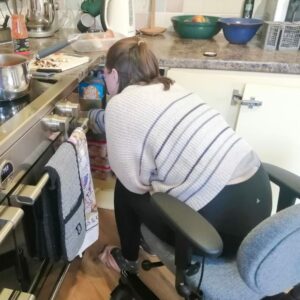
The best feature of the chair I found was the lift feature. It went low enough that I could easily reach into low cupboards without having to crouch (something my body pretty much refuses to do) and high enough that I was at a comfortable height to work on the countertops. I wish it had gone a bit higher so that I could have reached the top cupboards a little more easily, but I spoke with Chris about this, and he said that this is perfectly possible, and your desired height range would be discussed during the assessment before you place an order. The lift feature also helped reduce my knee pain as I could raise the chair to its maximum before standing up, which meant my sit-to-stand was not as far. Applying the brake also allows you to push down on a solid/sturdy base to help you get up.

Using this chair allowed me to cook dinner for my family for the first time in three years – cooking is a big independence skill I struggle with simply due to the amount of standing and pottering it involves. This chair made it suddenly seem like cooking might be something I could manage with the right technology. This was the most life-changing aspect of the chair for me. I was worried about using the chair when carrying a pan of boiling water to the sink but found this wasn’t an issue. The chair is stable and secure, meaning I could trust it to go where I needed to.


Other chores

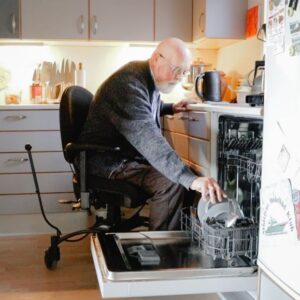
The VELA Chair also helped me with other tasks such as hanging up the washing and emptying the dishwasher. The lift feature means you can easily hang washing on both the bottom and top of the rack without overly stooping or reaching outside of normal ranges (see photos above). The feature is also helpful for unstacking the dishwasher as again, it stops you bending over so far and helps keep you steady. It is much easier to control than the 5 wheeled stool I use normally, which meant I no longer crashed around the kitchen and was instead moving much more intentionally.


Conclusion & Recommendation

Overall, I was very impressed with this chair. It is a good office chair that is very easy to adjust, but where it really shines is in the kitchen. It allowed me to cook a full meal for the first time in years and I was very sad to give it (and the independence it gave me) back at the end of the trial. If you struggle to potter around the kitchen as much as you need to, bend or reach high places, or are unsteady on your feet and want the extra support, I highly recommend looking at the VELA Chair.

                                                                                                                                Find your VELA Chair at Morton & Perry

Additional research on moisture at the skin cushion interface in wheelchair users

The skin performs a variety of important physiologic roles including protection from environmental exposure, preservation of internal homeostasis and thermoregulation amongst others. [Gray, 2011]

Moisture-associated skin damage (MASD) pathophysiology is related to both recurrent chemical and physical irritation to the skin barrier, triggering inflammation and subsequent skin damage. Multiple factors have a negative impact on the skin barrier function, including chemical irritants in urine and feces, changes in

skin surface pH, associated microorganisms, repeated skin cleansing activities, an occlusive perineal environment (due to the use of incontinence pads), and mechanical factors such as friction.

Exposure to moisture affects the integrity of the outermost layer of the skin which makes the skin more vulnerable to friction and skin tears. [Bostan, 2019]

Prevention and treatment of MASD include the removal of occlusive conditions, gentle skin cleansing, skin protection, and the application of therapeutic ointments. [Collier, 2016; Lumbers, 2019] However, moisture management at the skin cushion interface should not only focus on personal hygiene but also on moving moisture away from the skin cushion interface. This is due to the fact that support surfaces with a microclimate management function show significantly lower skin hydration levels. [Denzinger, 2020]

Vicair O2 cushions, which have a perforated liner, are effective in moving away moisture from the skin cushion interface. This effect becomes even more apparent when a top cover is used. The dissipation of moisture by the Vicair O2 cushions is so effective, that within 1hr, wet spots appeared on the surface underneath the cushion. [Call, 2016 (unpublished)]


CONCLUSION

Wheelchair cushions are often covered with incontinence covers to protect the cushion against moisture. However, prolonged exposure to moisture makes the skin more vulnerable for MASD and pressure injury development. Therefore, the focus should be shifted from protecting the cushion against moisture to protecting the wheelchair user against moisture to prevent MASD and pressure injury development.


Moisture at the skin cushion interface in wheelchair users

The skin performs a variety of important physiologic roles including protection from environmental exposure, preservation of internal homeostasis and thermoregulation amongst others. [Gray, 2011]

Moisture associated skin damage (MASD) pathophysiology is related to both recurrent chemical and physical irritation to the skin barrier, triggering inflammation and subsequent skin damage.


Multiple factors have a negative impact on the skin barrier function, including: chemical irritants in urine and feces, changes in skin surface pH, associated microorganisms, repeated skin cleansing activities, an occlusive perineal environment (due to the use of incontinence pads), and mechanical factors such as friction.


Exposure to moisture affects the integrity of the outermost layer of the skin which makes the skin more vulnerable to friction and skin tears. [Bostan, 2019]

Prevention and treatment of MASD include the removal of occlusive conditions, gentle skin cleansing, skin protection, and the application of therapeutic ointments. [Collier, 2016; Lumbers, 2019]


However, moisture management at the skin cushion interface should not only focus on personal hygiene but also on moving moisture away from the skin cushion interface.


Support surfaces with a microclimate management function show significantly lower skin hydration levels. [Denzinger, 2020]


Vicair O2 cushions, which have a perforated liner, are effective in moving away moisture from the skin cushion interface. This effect becomes even more apparent when a top cover is used.


The dissipation of moisture by the Vicair O2 cushions is so effective, that within 1hr, wet spots appeared on the surface underneath the cushion. [Call, 2016 (unpublished)]


Wheelchair cushions are often covered with incontinence covers to protect the cushion against moisture.

However, prolonged exposure to moisture makes the skin more vulnerable to MASD and pressure injury development. Therefore, the focus should be shifted from protecting the cushion against moisture to protecting the wheelchair user against moisture to prevent MASD and pressure injury development.


Postural stability and the effects of wheelchair cushions

Postural stability refers to the continuous process of postural changes during sitting. The capacity to maintain postural stability in a sitting position is a prerequisite to performing activities of daily living (ADLs) and reducing the risk of shoulder injury, but also social functioning, satisfaction with the equipment, and thus quality of life.

Deficits in postural stability can severely limit performance in these aspects of life. [Dean, 1997; Riley, 1995; Dyson-Hudson, 2004; Trefler, 2004]

There are several contributing factors to obtaining and retaining postural stability in a sitting

position, namely trunk strength, large base of support, anterior pelvic tilt, thigh support and

back support. Anterior pelvic tilt and thigh support can both be achieved using an appropriate

wheelchair cushion.

Several studies have been aimed at examining the influence of seat cushions on postural stability in sitting. These studies used interconnected air cell cushions, contoured foam cushions, and flat foam cushions, and one study also used compartmented air cell cushions: the Vicair Adjuster O2 and the Vicair Vector O2. [Assaoui, 2001; Vreede, 2018 (master dissterdation); Springle, 2003].

Both Vicair cushions allowed participants to reach significantly further on seated functional reach tests compared to the other cushions that were examined, which is indicative of increase of postural stability.

Postural stability is an important factor for independence and social functioning, which leads to an increase of the quality of life experienced by wheelchair users. Furthermore, the role of trunk control of shoulder injuries may be an important consideration in mitigating injury and improvement of wheelchair propulsion.

Therefore, the selection of an adequate wheelchair cushion is of utmost importance to ensure a satisfactory quality of life for wheelchair users. An increase of postural stability in a sitting position can be obtained by using a compartmented air cell cushion (Vicair, Wormer, The Netherlands).


Mobility Scooter Friendly Cities to Visit in Europe


Mobility scooter travellers who have visited Europe will tell you that every city has its advantages, but there are some you should altogether avoid if you are travelling with a scooter.

These are 4 cities that we think should be on your radar because they’re the easiest to explore from the comfort of your mobility scooter. So, take your pick and grab your scooter and go!


Places to visit with a mobility scooter in Europe and why

In our relentless quest to encourage you to get out there and see the world from the comfort of your mobility scooter, we’ve composed a short list of 4 European cities that are both scooter-friendly, accessible and a great place to start.

1.    Barcelona, SpainWith its delightful tapas, remarkable history and architecture and the added value of warm and inviting people, Barcelona is a must-see for anyone. The fact that this one-of-a-kind city is also largely flat and wheelchair and mobility-scooter-friendly makes it number one on our list. Barcelona gives disabled people a priority and grants free access to its many breathtaking landmarks. Most buses and metro trains are equipped with ramps and lifts, and you do not have to endure standing in the often very long lines to see the city’s attractions.

We suggest you ride along the famous La Rambla that leads all the way to the white beaches that are accessed with wooden paths that go all the way to the water’s edge. You can also visit Barcelona’s medieval city centre which has very few cobblestones and provides a smoother ride than delivered by many othe

r European cities like Paris or Istanbul. If required, there are many accessible hotels to choose from across town, and you can also book one of the wonderful accessible cruises that depart from the town’s port.


2.    Berlin, Germany
Berlin is a truly cosmopolitan city with 4 varying quarters and a “something for everyone” dynamic. Berlin is also a very flat, highly accessible city, but its culture and vibe couldn’t be more different to Barcelona. With hundreds of hotels to choose from and so much history and culture to explore, Berlin is a sound choice for any age and group configuration, but it’s also a great city to see on your own.

The Berlin Zoo is a great place for anyone to spend an entire day exploring, regardless of age or mobility capabilities. Hiring a professional tour guide to take you to visit some of the city’s hidden sites like Hitler’s famous

ATTO travel scooter new zealand bunker, will give you the full and intriguing story of this bustling metropolis.
There are many beautiful parks and interesting museums all over the city, so try to read up and plan a daily itinerary so you can take it all in. Most landmarks in Berlin will prioritize disabled access and offer free or discounted entrance. Note: If you are planning on taking the local subway, or the U-Bahn, make sure you check that the elevators at each station you plan to use are in order.


3.    Rotterdam, Netherlands
Although many people associate the Netherlands with Amsterdam as the country’s capital, Rotterdam is in fact the country’s business centre. The city is also famous for its many attractions and variety of activities, the majority of which are scooter and wheelchair accessible. There are plenty of museums and some must-see architectural sites with access, including the Markthal food square, koopgoot shopping centre, cubic houses and the Euromast tower. There are many ways to take this guided tour either using a tour van or taking an accessible harbour cruise depending on your preference. Rotterdam should also be high on your list due to its close vicinity to its accessible beach that features a path to the highest watermark, free beach wheelchairs and walking aids. Spend a full day at this lovely beach or opt for a day exploring the city’s famous botanical gardens. Almost all of Rotterdam’s bus stops are accessible. The people of Rotterdam are very friendly and highly tolerant, and as the entire country is known for its flat terrain, Rotterdam and the area are quite easily covered in a week’s fun-filled holiday.


4.    Ljubljana, Slovenia
Last but not least on our list today is Lubliana, the capital city of Slovenia.  Slovenia has taken huge strides in improving the accessibility of its tourist facilities and transportation system. The city’s capital Ljubljana has introduced priority access and discounts to mobility impaired and disabled persons for its many cultural and historical sites. Make sure to kick off your adventure with a visit to the Ljubljana Castle, one of Slovenia’s most visited tourist attractions that has been made accessible over recent years. Alternatively, spend a day exploring the accessible local Zoo for a refreshing day out. Slovenia is also famous for its many caves and the Postojna Cave offers disabled-friendly access, parking and toilets. The site’s friendly staff are available to help visitors board the small tourist train that takes them underground. Ljubljana is home to many museums and art galleries and the general atmosphere across the city is lively and welcoming.


travel scooter foldable


Now that we’ve made our recommendations and given you some basic information, it is important to keep in mind that despite the increasing possibilities, it is still vital to plan ahead. If you will be travelling by plane, make sure you read our post about choosing a scooter that is suitable for flying. And most important – make sure to share your adventures with us so that we can enrich our community and encourage others to follow through!

Vela Independence Chair for fall prevention for the elderly offers numerous benefits

Why is fall prevention important for older adults?

Preventing falls among the elderly is crucial due to dizziness, balance problems, and weakened muscle strength, which are among the most common causes of falls in this age group. The VELA chair is a specially designed chair that aims to prevent falls among the elderly.

The Risk of Falling Increases Significantly with Age

In fact, a study conducted in the Municipality of Copenhagen revealed that one-third of residents aged 65 and above experience at least one fall per year. Globally, this applies to more than one in four individuals2. The same Copenhagen study emphasises that once you have experienced a fall, the risk of falling again increases even further.

Not only does the risk of falling increase with age, but the consequences of a fall can also be much more severe compared to when you were younger.

Tragically, falls are the second-leading cause of death worldwide, following traffic accidents. Each year, an estimated 684,000 people die due to falls globally, with a significant number occurring among older adults over the age of 60.


Vela chairs independence for seniors

Consequences of falls:

When an elderly person falls, it can result in fractured bones, such as hip or thigh fractures. Unfortunately, this often leads to severe consequences:

  • Lengthy hospital stays
  • Prolonged rehabilitation processes
  • Surgical procedures and potential reoperation
  • Requirement for aids during hospitalisation and at home
  • Need for care, such as home care, in everyday life

Unfortunately, it is also often the case that the consequences of a fall can lead to poorer mobility and result in another fall. Moreover, the fear of falling again can lead to the avoidance of specific situations and activities in an attempt to prevent future falls.

This significantly diminishes the quality of life for the elderly. Among other things, effective fall prevention aims to counteract these negative impacts.

Vela chairs

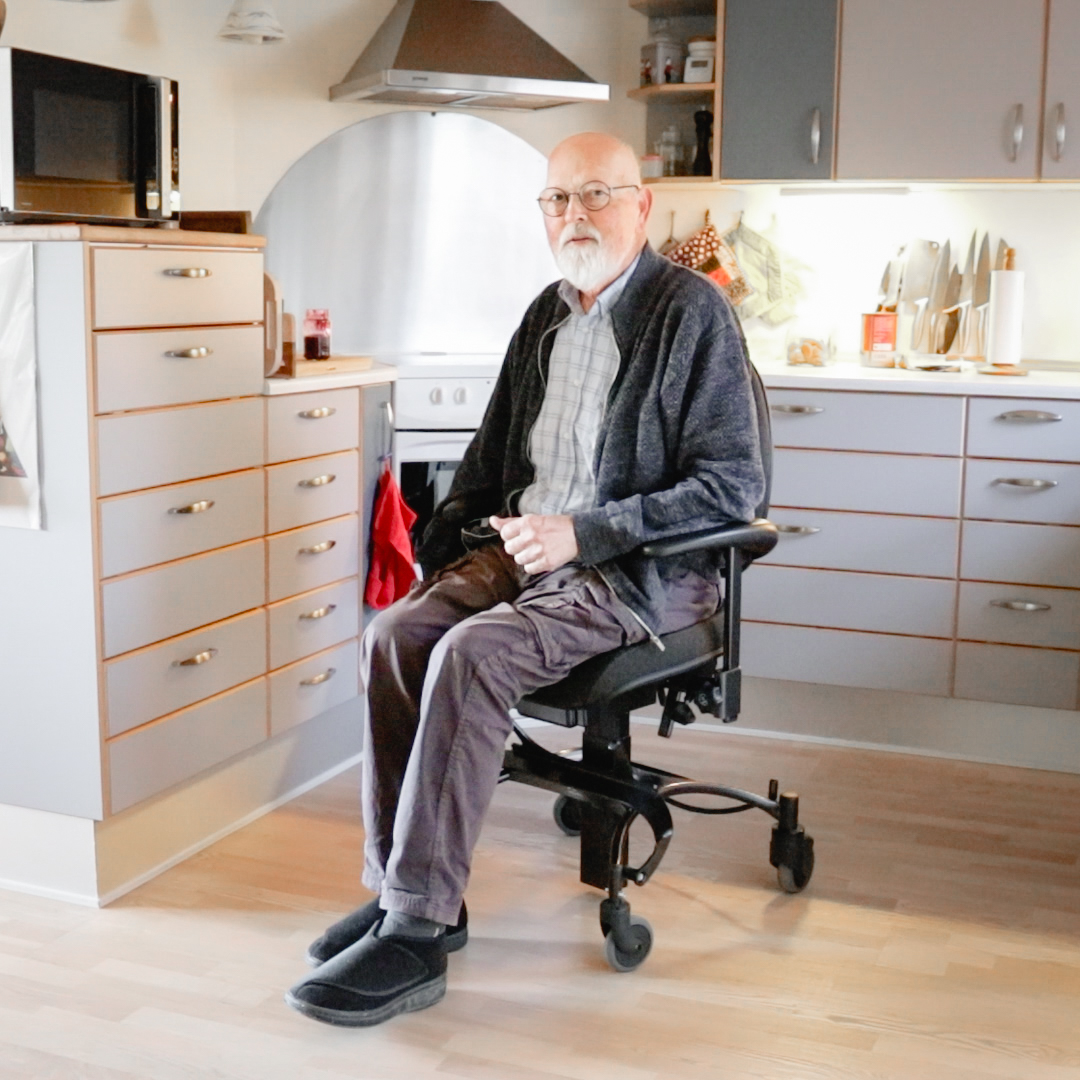
Kaj Henning Was Always Afraid of Falling

Kaj Henning, an elderly gentleman, has experienced reduced muscle strength in his legs due to his age. This has made him feel insecure about losing balance and falling, and his fears are justified.

Kaj Henning has faced falls in his home before and is concerned that another fall could result in a fracture. He has also realised from past experiences that he cannot get up on his own if he falls again.


Due to his insecurity and fear, Kaj Henning has refrained from performing many practical tasks at home, relying on his wife, Lene, to handle most of the household chores. However, the extra workload on Lene does not compare to the worry she carries for her husband. Whenever she hears an unexpected sound, she often thinks:

What’s happening now? Has he fallen?

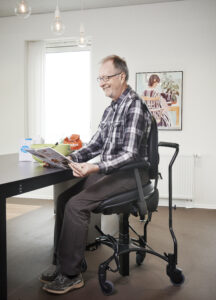
However, the situation at Lene and Kaj Henning’s home changed when Kaj Henning was provided with a VELA Chair. The chair enables him to be more active in his daily life. He can now help more around the house, and the chair provides excellent reassurance to both Kaj Henning and Lene, as Kaj Henning is not at as high a risk of falling. He feels secure when he sets the table, loads the dishwasher, or picks things up from the floor.

As a result, Kaj Henning has become less dependent on help from Lene.

The burden of worry that Lene had unconsciously carried for Kaj Henning has now been lifted.

Lene expresses her relief, saying:

Now, there’s less for me to be anxious about.

Kaj Henning particularly appreciates the electric height adjustment on the chair because, as he explains, “There’s a difference between sitting and walking.” Therefore, depending on his activity, he makes many small adjustments to his sitting height throughout the day to ensure comfort.

Lene notices a significant change in Kaj Henning’s activity level and his sense of independence. She remarks that he has become much more active and hopes this positive effect extends to his edematous legs.

The VELA chair has helped Kaj Henning be more active and independent at home, ultimately improving his quality of life, not just for himself but also for his wife, Lene.

Whether it’s called quality of life, I don’t know, but it feels like it… Actually.

Fear of Falling Is a Prevalent Problem

After experiencing his first fall, Kaj Henning began feeling insecure about engaging in certain activities that he perceived to have a higher risk of falling again. As a result, Kaj Henning refrained from performing some tasks at home, despite being capable of doing them prior to the fall.
This restriction in activity can lead to the deterioration of both physical and cognitive functions, ultimately resulting in a loss of independence and an increased need for care.
Studies have shown that such deterioration is considered crucial in terms of experiencing reduced quality of life. In fact, a 2018 review conducted by Schoene et al. demonstrated that the fear of falling has significant implications for the quality of life among older adults, and interestingly, it has a greater impact than the falls themselves.
Initially, the fear of falling among older adults was thought to be limited to those who had already experienced falls, commonly referred to as “post-fall syndrome.”
However, it has been discovered that the fear of falling is not exclusive to older individuals with prior falling incidents but is also prevalent among older adults with no history of falls.

Kaj wife

The Impact of Fear on Social Life

Fear can have a profound impact on social and active individuals and their loved ones, as is the case with Kaj Henning and Lene. Therefore, it is important not only to focus on physical capabilities but also to incorporate the psychological perspective into the rehabilitation process and preventive mindset.

Kaj Henning and Lene’s story is not unique, and our experience shows that there are many elderly individuals in a similar situation to theirs. This is why fall prevention should be approached from a physical, contextual, and psychological standpoint.

How a VELA Chair Assists in Preventing Falls and the Apprehension of Falling

The prevention of falls among the elderly is crucial due to their significant physical and psychological consequences. This is where VELA’s office chair with a brake and an electric lift can be a valuable aid. It offers a sense of security and stability, both physically and mentally, effectively reducing the fear of falling.Research has demonstrated the positive impact of environmental modifications, often termed “environmental adaptations,” on fall prevention. These adaptations involve adjusting the home environment to create optimal conditions for engaging in daily activities4. According to this research, the use of assistive devices is an effective way for individuals like Kaj Henning to enhance their ability to perform various activities at home.One effective method of adapting your home environment is by incorporating a VELA chair. This fall prevention chair enables easy and secure movement between different rooms while remaining seated. Moreover, it is suitable for use in all areas of the house and requires minimal space.

You can adjust the chair’s height yourself

A chair that has both a brake and an electric lift is essential to preventing falls among the elderly. The VELA chair with an electric lift provides the user with an aid that assists them in standing up.

To use the chair safely, follow these steps:

  • Apply the brake by using the hand brake
  • Press the button to raise the seat. This will elevate the chair and help you stand up
  • Gently place your feet on the floor, and regain your balance while being supported by the chair


The VELA chair offers additional benefits as well. It allows you to perform various daily tasks while remaining seated. For example, you can lower the chair to reach lower shelves in a cupboard or raise it to access clothes in a wardrobe. However, always ensure that the chair is properly braked before carrying out any activities to ensure your safety and security.

One notable feature of the chair is its electric lift, which provides a smooth and gradual change in seat height. This helps prevent dizziness or loss of balance that can occur with sudden movements. By instilling a sense of security, the electric lift contributes to a safer user experience.

Walk the chair around and stay mobile

Our mobility chairs for the elderly are equipped with four smooth-running wheels. This means you can lower the chair’s height and use your legs to “walk” or push the chair around while seated.

With a VELA fall prevention chair, you can comfortably engage in most of your daily activities while seated, reducing the fear of falling. The smooth-running wheels provide enhanced mobility, enabling you to take care of yourself and move around with ease.

If you need to transition from the chair to a sofa, simply walk the chair to the sofa, apply the brake, fold the armrest down, and slide onto the sofa. You can also rely on the armrest for support during the transfer.

A fall prevention chair offers safety and security, empowering you to handle various tasks independently without relying on others for assistance.

Security, stability, and a better quality of life

There are many benefits to preventing falls among the elderly. Using a VELA chair helps reduce accidents, hospitalisations, and after-effects. Therefore, we recommend getting a VELA chair before an accident happens. You can use it when you are feeling tired to prevent yourself from falling.

A fall prevention chair for the elderly offers security when your strength fails while also providing a stable foundation to continue your usual activities, helping you maintain a good quality of life even if you have a fear of falling.


The VELA Chair Has Transformed Kaj Henning’s Daily Life

After receiving a VELA chair, he has gained the confidence to perform a wider range of tasks at home.

It not only relieves his wife but also provides beneficial exercise for Kaj Henning. The VELA chair assists him in areas where he is weakest, eliminating his fear of the consequences of his physical limitations. For instance, it compensates for Kaj Henning’s reduced leg muscle strength and lack of balance. Consequently, he can now work at the kitchen table and cabinets at a higher level, as well as perform tasks closer to the floor, such as emptying and loading the dishwasher.

His fear of falling, which he used to associate with this strength- and balance-demanding activities, has been eliminated thanks to the VELA chair.

The VELA chair actively contributes to enhancing Kaj Henning’s level of activity by reducing his feelings of insecurity. Increased activity can help strengthen Kaj Henning’s leg muscles and alleviate swelling. For Kaj Henning, the VELA chair has made it possible to perform activities that were previously impossible for him, boosting his confidence and independence. These two factors have had a significant impact on his overall quality of life.

SOURCES

https://www.vela.eu/a-chair-for-fall-prevention

who.int

Falls and Fall Injuries Among Adults Aged ≥65 Years – United States, 2014

National Library of Medicine 

Resistance against sliding and pelvic tilt

Introduction

Upright sitting in a wheelchair is important to reduce pressure on the sacrum and coccyx, it aids in better breathing, increases head control, increases stability and improves independence. A good wheelchair cushion creates a levelled sitting surface, reduces risk of skin breakdown, and limits sliding and slouching.1

A study was designed in order to test the resistance of different wheelchair cushions against sliding of the user in a laboratory environment. Creeping of the pelvis forward due to gravity and creating posterior pelvic tilt is also studied.


Method

A skinny indenter is placed on different cushions, 30kg is placed on the indenter to simulate the weight of the upper body. The indenter is horizontally pulled forward. A Force Gauge (PCE-FM 0.5-500N) measures the force that is needed to displace the indenter 4cm (dynamic force).

The test on each cushion is repeated three times, to ensure repeatability. Five different cushions are tested, of which three Vicair cushions, namely: Adjuster O2 (10cm thickness, Comfair cover), Vector O2 (10cm thickness, Comfair cover), and the Active O2 (9cm thickness). The other cushions that were tested are a ROHO Quadtro select high profile (locked) and a Jay J3. The Vicair Vector O2 is tested directly out of the box and set-up for optimal immersion (2.5cm below the indenter).


Results

R&D

Literature Review: Pelvic obliquity

Because in a wheelchair the backsupport gives resistance

The maximum force measured is the resistance that the cushion gives against the indenter to prevent sliding. This is the most relevant measurement because this force is the resistance the cushion can give the user to sit stable. The maximum force ranges from 100N for a Jay J3 to 176N for a Vicair Vector O2.

The Jay J3 cushion, a foam cushion with fluid inlay, gives the least resistance against slouching, with a mean of 106N, followed by the Vicair Active O2, with a mean of 137N. The out of the box Vicair Vector O2 performs almost the same as the ROHO Quadtro Select, 148.2N vs 147.8N. But when the Vicair Vector is set up for the indenter it outperforms all the other cushions, with a mean force of 172N. The out of the box Vicair Adjuster O2 also performs good with a mean resistance of 166N.


Discussion

The results do not only represent the force that is needed for sliding, but can also be extrapolated to resistance to pelvic tilt.

Because in a wheelchair the backsupport gives resistance


The maximum force measured is the resistance that the cushion gives against the indenter to prevent sliding. This is the most relevant measurement because this force is the resistance the cushion can give the user to sit stable. The maximum force ranges from 100N for a Jay J3 to 176N for a Vicair Vector O2.


The Jay J3 cushion, a foam cushion with fluid inlay, gives the least resistance against slouching, with a mean of 106N, followed by the Vicair Active O2, with a mean of 137N. The out of the box Vicair Vector O2 performs almost the same as the ROHO Quadtro Select, 148.2N vs 147.8N. But when the Vicair Vector is set up for the indenter it outperforms all the other cushions, with a mean force of 172N. The out of the box Vicair Adjuster O2 also performs good with a mean resistance of 166N.


Discussion

The results do not only represent the force that is needed for sliding, but can also be extrapolated to resistance to pelvic tilt.


against pelvic tilt, as a result the user needs to slide over the cushion to slouch and create the pelvic tilt. Which is also visible is figure 1.


Conclusion

Vicair cushions offer very good resistance against sliding and pelvic tilt. Out of the box, the Vicair cushions are already a better choice compared to the tested Jay J3 cushion (30 – 63% better). The Vicair Adjuster O2 is, out of the box, better than the set ROHO Quadtro Select (12% better). When the Vicair Vector O2 is ideally adjusted for the indenter, the positive difference becomes more apparent (16% better, 24N difference).


Thank you for contacting us.
Your message has been sent and we will be in contact shortly.

If you have an urgent inquiry please call us on:
0800 238 523
Business hours:
Mon – Fri 8.30 am – 5 pm